
Rethinking Economic Security
What the Brussels Forum Got Right—and What It Missed


As an economist focused on UK trade and productivity—and with a long-standing interest in the structural transformations unfolding in China—I followed the 2025 Brussels Economic Security Forum with a mixture of agreement and unease. The forum offered sharp insights and welcome urgency. But as a trade economist leading research at the Centre for Business Prosperity at Aston University who pays close attentions to the global dynamics from both worlds - the west and the east - I believe we need a more grounded understanding of what economic security truly entails—and a firmer grasp of how domestic and global dimensions must be aligned.
Economic security has become central to trade policy, industrial strategy, and investment decisions. Yet the term remains under-defined. At times in the heated discussions, participants might have different issues in mind, intertwined with economic issues, politics and social matters. What follows is a reflection on the Forum’s dominant themes, and an economist’s view on what we still need to confront.
1. Economic security as national security
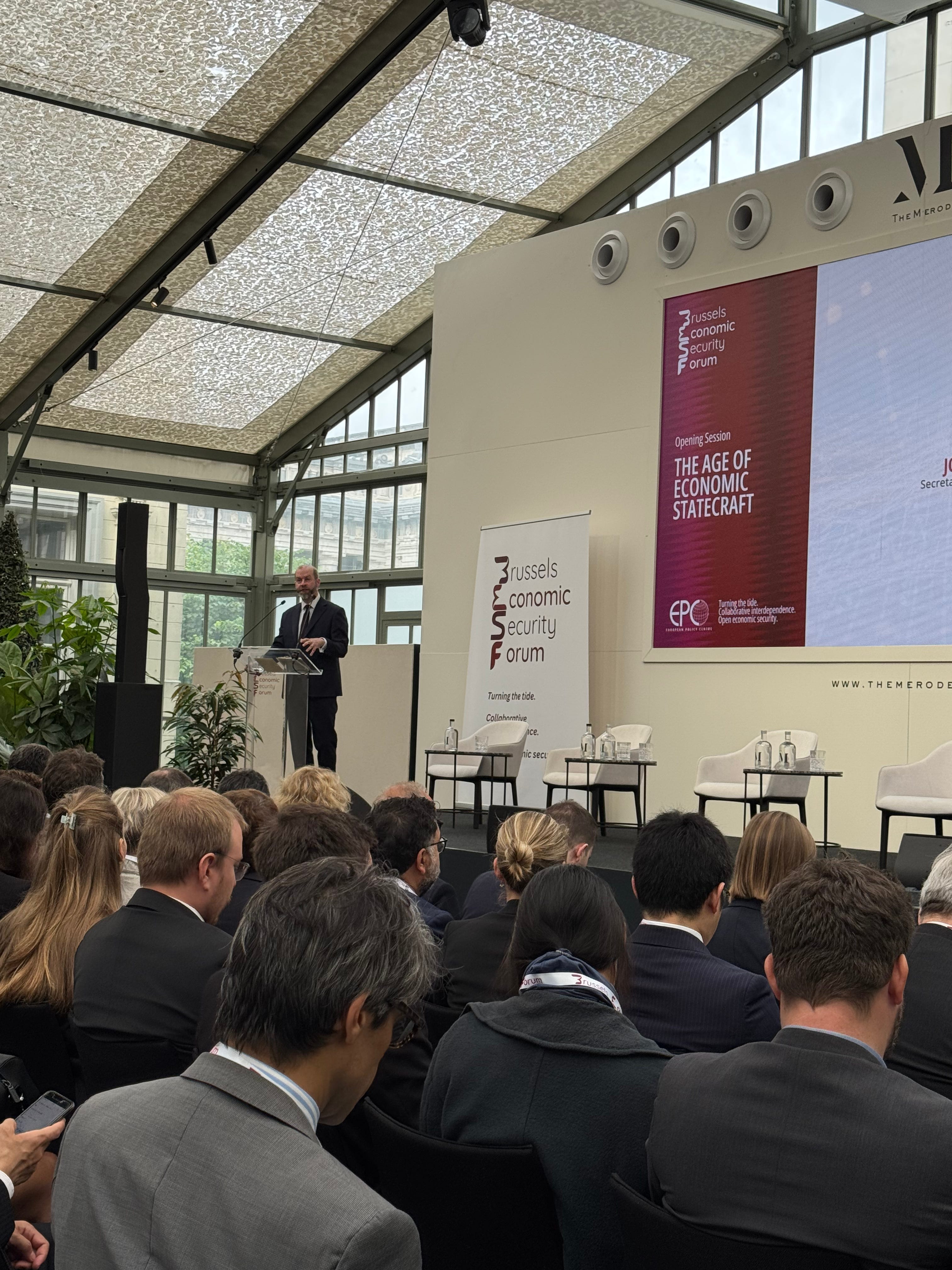
The Forum reflected a strong consensus: economic policy is now security policy. The experience of COVID-19, the energy shock from Russia’s invasion of Ukraine, and ongoing US-China techno-geopolitics have revealed deep structural vulnerabilities.
“Because economic security is national security, it’s imperative that we take the necessary steps to increase our resilience.” — Jonathan Raynolds, UK Trade Secretary
This reframing is welcome. But it also risks treating economic tools as merely extensions of statecraft, rather than recognising their role in fostering long-term growth, innovation, and inclusive prosperity.
2. Strategic dependencies and systemic vulnerabilities
The Forum highlighted important risks:
Over-reliance on China in EVs, rare earths, and digital infrastructure.
The decline in domestic production of foundational technologies.
The strategic exposure arising from opaque data flows and supply bottlenecks.
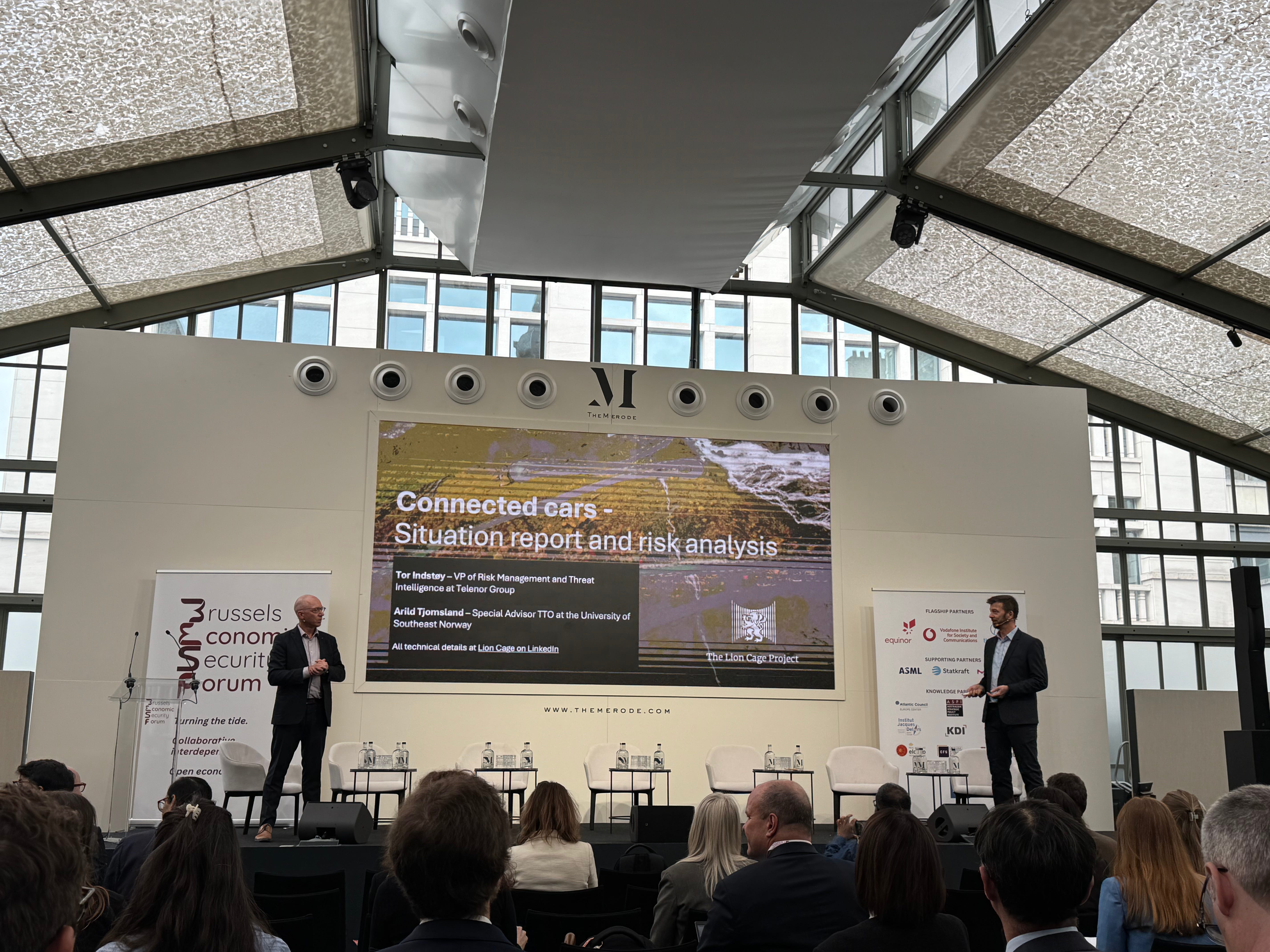
"Chinese EVs are data centres on wheels—connected to cloud servers based in China. We literally drove one into a mine to isolate its signal." — Norwegian cybersecurity expert
The concern is valid. But it is vital to avoid conflating interdependence with fragility. Trade is not a vulnerability by default—it becomes one when diversification, transparency, and standards are neglected.
3. Allies, institutions, and industrial strategy
G7 countries are clearly moving toward a more coordinated economic security agenda. The creation of new roles, like Canada's "Economic Resilience and Security Sherpa," points to institutional learning. There is a renewed sense that industrial strategy must be proactive and cross-border.
Still, as an economist, I would caution against strategies that over-prioritise redundancy at the cost of efficiency. The challenge is not to retreat from global markets, but to embed resilience into how we compete within them.
4. The limits of the rules-based order
There was understandable scepticism about whether the WTO is still equipped to manage systemic economic risks and coercive practices.
But abandoning multilateralism carries its own strategic costs. The principles of transparency, predictability, and non-discrimination remain critical—especially for middle-sized, open economies like the UK.
5. Why China must be at the table
As someone who understands China’s institutional complexity and developmental trajectory, I found the Forum’s treatment of China at times one-dimensional. While I could see many Chinese-looking note-takers frenetically typed in everything they heard in the forum on their devices, and China was frequently the topic of discussion, ironically there was no single Chinese speaker on that stage among the couple of dozens of speakers of the day.
China undoubtedly poses structural challenges. Its industrial overcapacity, its integration of commercial and state actors, and its selective transparency are real concerns. But no sustainable vision of economic security can exclude China.
Multilateral governance, by its nature, must accommodate rival systems. Designing a rules-based environment that excludes the world’s second-largest economy is neither realistic nor desirable.
" They (Countries in Asia) see China's capability in terms of technology, as a source of investment, as an important market, and so they take a very balanced view, and they really make an effort to engage China and engage China to develop, and I think that's actually the right recipe for Europe as well.." — Albert Park, Chief Economist, Asian Development Bank
The West must engage China in setting standards, enforcing transparency, and managing dependencies—not because it is easy, but because it is necessary. Economic security cannot be reduced to strategic exclusion; it must involve institutional inclusion, backed by credible incentives and domestic preparedness.
What Was Missing: A Domestic Reckoning
Too much of the discussion focused on international threats and not enough on domestic foundations.
From my perspective, economic security begins with productivity. It rests on dynamic firms, a skilled workforce, patient capital, and effective regulation. If we overinvest in foreign policy solutions while neglecting industrial renewal at home, we risk treating symptoms rather than causes.
There is no shortcut: long-term resilience depends on reindustrialisation, innovation capacity, and inclusive growth. These are not matters of defence policy; they are the everyday business of economic policy.
A Way Forward
The Brussels Forum was a timely and important gathering. It marked progress in recognising the complexity of economic security. But as we move forward, we must:
Rebuild our domestic economic capabilities;
Resist false choices between openness and resilience;
And engage, not isolate, systemic rivals like China.
Economic security is not just about shielding ourselves from external shocks. It is about strengthening the institutional and productive capacity of our economies—through policy seriousness at home and strategic cooperation abroad.